Explore the remarkable temples built by King Jayavarman VII, each reflecting his devotion, vision, and architectural mastery.
Preah Khan – Constructed on the site of Jayavarman VII’s victory over the invading Chams in 1191, Preah Khan, meaning “The Sacred Sword,” served multiple purposes: a Buddhist university, a temple, a monastery, and even a small city with its population organized by function. Dedicated to the king’s father, the complex showcases intricate carvings, serene galleries, and a blend of religious and civic architecture that highlights the grandeur of the late 12th century.
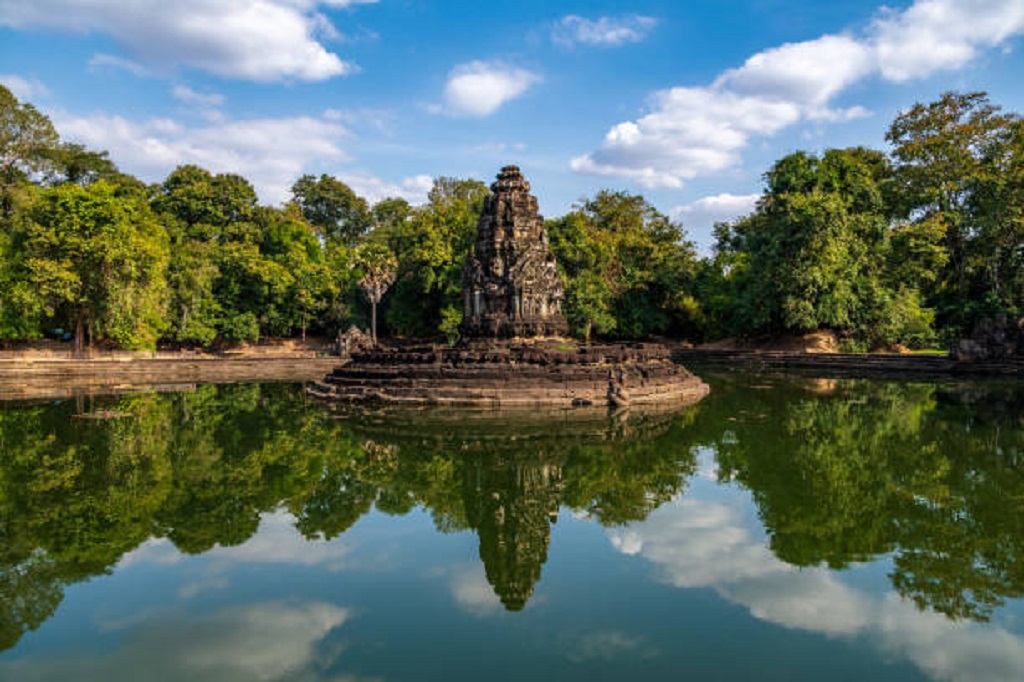
Neak Pean – Known as the “Entwined Serpent,” Neak Pean is an artificial island temple built in the middle of a man-made reservoir. Measuring 350 meters on each side, the central sanctuary is surrounded by a motif of
serpents at its base. Originally designed for spiritual and healing purposes, Neak Pean exemplifies the sophisticated hydraulic engineering and symbolic artistry of Jayavarman VII’s reign.
Ta Som – This smaller, unrestored temple, built at the end of the 12th century, is dedicated to the king’s father and follows the Bayon style of art. Despite its partially overgrown and weathered state, Ta Som’s intricate
carvings and architectural details provide a vivid glimpse into the aesthetics and spiritual life of the era.
Together, these temples offer a fascinating insight into the religious devotion, artistic vision, and historical legacy of one of the Khmer Empire’s greatest kings.